
Please note: Not all implant materials may be offered. To learn which options are available for you, call our Issaquah dental office at (425) 526-5424.
Restore Your Smile With the Right Dental Implant Material
Dental implants are widely considered the gold standard for tooth replacement, offering predictable, long-term results that closely mimic real teeth in both function and appearance. If you’re searching for dental implant materials in Issaquah, understanding how different materials work—and which one is right for your needs—is an essential first step.
At Eastside Dental Implant Center, Dr. Sidhu provides personalized dental implant services near you for patients in Issaquah, Bellevue, Kirkland, and Mirrormont, WA. Choosing the right implant material plays a major role in your comfort, oral health, aesthetics, and long-term success.
Call our Issaquah implant dentist at (425) 526-5424 to schedule a dental implant consultation at our Issaquah dental office near you.
What Are Dental Implants Made Of?
A dental implant is designed to replace the tooth root of a missing tooth and serve as a strong foundation for a crown, bridge, or full-arch restoration. Implant materials must be highly biocompatible, extremely durable, and able to integrate with the jawbone through a process called osseointegration.
Modern implant dentistry primarily relies on titanium implants, zirconia (ceramic) implants, and, in select cases, hybrid or composite implant materials.
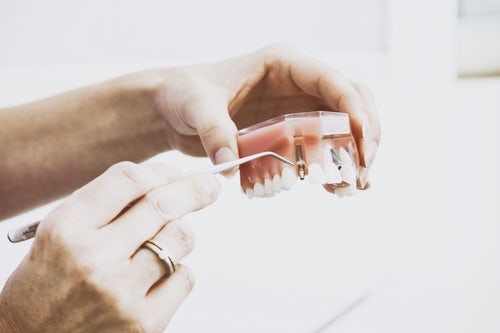
Types of Dental Implant Materials
Titanium Dental Implants: The Gold Standard
Titanium dental implants have been used successfully for decades and remain the most common choice in dental implant surgery.
Why Titanium Implants Are So Popular:
- Made from pure titanium or titanium alloys
- Exceptionally biocompatible, allowing bone cells to attach directly to the implant surface
- Naturally resistant to corrosion in the mouth’s surrounding environment
- Extremely durable with excellent fatigue resistance
- Long-term success rates exceeding 95%
Through osseointegration, titanium implants fuse securely with the jawbone, helping prevent bone loss and protecting adjacent teeth. Advanced surface treatments, such as acid etching, increase surface area and improve cell attachment, leading to more predictable results.
Titanium implants are suitable for:
- Single-tooth replacement
- Multiple missing teeth
- Full-arch restorations
- Patients seeking lasting results with proven reliability
For most patients and implant providers, titanium remains the safest and most versatile dental implant material available today.
Zirconia Implants: A Metal-Free Alternative
Zirconia dental implants—often called ceramic implants—are an increasingly popular option for patients who prefer metal-free dentistry or have concerns about metal sensitivity.
Benefits of Zirconia Dental Implants
- White, tooth-colored material for superior aesthetic appearance
- Extremely biocompatible and gentle on gum tissue
- No risk of visible gray metal near the gum line
- Ideal for patients with a known metal allergy or history of allergic reactions
Many zirconia implants feature a one-piece construction, meaning the implant and abutment are fused together. This design reduces bacterial buildup around the gums but requires precise placement during the surgical process.
Considerations With Zirconia
While zirconia implants offer excellent aesthetics, they may come with:
- Higher cost compared to titanium
- Less flexibility in angulation during placement
- Slightly increased brittleness, though modern zirconia dental materials have improved significantly
Dr. Sidhu will evaluate your bone quality, gum health, bite forces, and cosmetic goals to determine whether titanium or zirconia implants are the best choice for your smile.
Alternative and Emerging Implant Materials
While titanium and zirconia remain the most reliable and widely used materials for the implant fixture (the part placed in the jawbone), research continues into alternative options for specific situations.
- Polymers (e.g., PEEK): Gaining attention for their lightweight design, bone-like flexibility, shock absorption, and excellent biocompatibility; suitable for metal allergies or reduced stiffness needs, but less common and mainly used in specialized/research settings.
- Other Metals (e.g., gold alloys, stainless steel, cobalt-chromium): Historically used but largely replaced by titanium due to better osseointegration, corrosion resistance, and success rates; rarely considered today, with generally lower predictability.
Composite Materials for Dental Implant Restorations
The visible part of your dental implant—the crown, bridge, or denture—is known as the restoration. While porcelain-fused-to-metal or full zirconia crowns are popular for their strength and aesthetics, composite resin materials are also commonly used, especially for temporary restorations or in certain cost-effective cases. These restoration materials offer:
- Natural tooth-like appearance with customizable shading
- Excellent bonding to the implant abutment
- More affordable than all-ceramic options
- Shock-absorbing properties that can reduce stress on the underlying implant
Composite materials are durable for everyday use and easy to repair if needed, making them a practical choice for many patients. Dr. Sidhu will recommend the best restoration material based on your bite strength, aesthetic goals, and budget.

Key Factors When Choosing Dental Implant Materials
Biocompatibility
Implant materials must work in harmony with your bone, gums, and surrounding tissues. Titanium and zirconia are both considered highly biocompatible materials, minimizing inflammation and supporting gum health.
Strength and Durability
Dental implants endure constant pressure from chewing and everyday life. Titanium offers exceptional strength and flexibility, while zirconia provides impressive durability with added cosmetic benefits.
Aesthetic Results
For front teeth or cosmetic dentistry cases, zirconia’s natural white color may deliver the most seamless match to your natural teeth.
Allergies and Sensitivities
Patients with concerns about metal sensitivity or allergic reactions often prefer zirconia or other ceramic implant materials.
Long-Term Success
The right implant material helps protect the jawbone, maintain gum tissue, and support a fully restored smile for decades with proper care.
The Dental Implant Procedure: What to Expect
Dental implant surgery involves placing the implant into the jawbone, allowing time for healing and osseointegration, followed by attaching a custom-made restoration.
Temporary teeth may be provided during healing so you can smile confidently while your implant integrates. Once complete, your restoration will look, feel, and function like real teeth.
Caring for Your Dental Implants
Dental implants don’t decay, but they still require excellent dental care.
- Brush twice daily with fluoride toothpaste
- Floss around implants to protect gum tissue
- Attend regular dental checkups
- Avoid habits that compromise gum health, such as smoking
Proper care helps ensure your implant materials last for decades.
Frequently Asked Questions
Most patients are excellent candidates for titanium dental implants due to their durability and long-term success. Zirconia implants may be recommended for patients seeking metal-free or cosmetic solutions.
Yes. Dr. Sidhu reviews your medical history and can recommend zirconia implants if metal sensitivity is a concern.
Titanium implants can last 20 years or more with proper care, while zirconia implants show promising longevity as newer innovations enhance their durability. The lifespan depends on material choice, implant care, and overall oral health.
While switching materials is possible in certain cases, it involves additional procedures and should only be done under the guidance of a qualified implant dentist or oral surgeon.
Regardless of the material, maintaining excellent oral hygiene is crucial. Regular checkups and cleanings will ensure your dental implants last as long as possible.