
Elevate Your Smile with Sinus Lift Surgery in Issaquah
If you’ve been told you don’t have enough bone for dental implants, a sinus lift may be exactly what makes your implant a reality. At Eastside Dental Implant Center, Dr. Sidhu has helped patients throughout Issaquah, Bellevue, Kirkland, Sammamish, and Newcastle rebuild the upper jawbone they need using advanced 3D imaging and proven bone grafting techniques that get predictable, lasting results.
Don’t think of a sinus lift as a detour on your path to implants or proof that dental implant treatment is less than ideal for your smile. This supplemental procedure builds a stronger foundation for implants, setting you up for better success and natural-feeling restorations.
Ready to find out if you’re a candidate for a sinus lift at our Issaquah dental office? Call (425) 526-5424 to schedule your consultation with our Issaquah dental implant provider. We’ll take a same-day 3D scan and give you a clear answer.

What Is a Sinus Lift? (And Why Would You Need One?)
Your upper back teeth sit just below the maxillary sinuses—large, air-filled spaces inside your cheekbones. In a healthy jaw with all teeth intact, there’s plenty of bone separating your sinus floor from your gum line. But when upper back teeth are lost, two things happen fast: the bone beneath them starts to resorb (shrink), and the sinus itself can expand downward to fill the space. Within a year or two, there may simply not be enough bone height to securely anchor a dental implant.
That’s where a sinus lift, also called sinus augmentation or sinus floor elevation, comes in. The procedure gently repositions the sinus membrane upward and fills the space beneath it with bone graft material. Over the next several months, that graft fuses with your existing jawbone, creating the solid foundation a dental implant needs to last a lifetime.
Think of it like this: before you build on a lot, you make sure the ground is solid. A sinus lift does exactly that for your upper jaw.
Quick facts:
- The most common bone grafting procedure for the upper jaw
- Performed in-office under local anesthesia, with sedation available
- Success rates consistently above 95% in current clinical literature
- Often, the difference between “you can’t have implants” and “you can.”
Why Patients Choose Eastside Dental Implant Center for Sinus Lifts Near Issaquah
Plenty of dental offices in the Eastside area offer sinus lifts. Here’s what’s different about working with Dr. Sidhu:
- In-house 3D CBCT imaging. We don’t send you to a radiology center. Your 3D scan is taken and read at our Issaquah office during your first visit. That means faster planning, better precision, and no delays.
- Piezoelectric surgical technology. Ultrasonic piezo instruments allow Dr. Sidhu to elevate the sinus membrane with significantly less trauma than traditional rotary drills, offering lower perforation risk, less post-op swelling, and faster healing.
- Implant specialist, not a generalist. Eastside Dental Implant Center is a dedicated implant practice. Dr. Sidhu focuses specifically on implant dentistry and supplemental procedures. This isn’t a side service at a general dental office.
- Transparent, all-in treatment planning. You’ll leave your consultation with a complete written treatment plan, timeline, and cost estimate—not vague “it depends” answers.
- Serving the entire Eastside. We regularly see patients from Bellevue, Kirkland, Sammamish, Newcastle, Mirrormont, Renton, and Mercer Island. If you’ve been searching for a sinus lift dentist near you in the greater Issaquah area, we’re a convenient, specialist-level option.
Do You Need a Sinus Lift Near You? Signs to Watch For
Most patients who need a sinus lift don’t know it until a dentist takes a 3D scan. Bone loss happens silently; there’s no pain, no obvious symptom. The only reliable way to know is imaging.
That said, you’re more likely to need a sinus lift if you:
- Are missing one or more upper back teeth (molars or premolars), especially if they’ve been gone for a year or more
- Were told by another provider that you “don’t have enough bone” for implants
- Have a history of gum disease or periodontitis, which accelerates bone loss
- Experienced jaw trauma or injury to the upper jaw
- Have a naturally low sinus floor. Some people are simply born with less clearance between the sinus and the jawbone
At our Issaquah dental office, we use in-house cone beam CT (CBCT) 3D imaging to measure your exact bone height and sinus anatomy before recommending any procedure. Patients from Kirkland or Sammamish often expect bad news but are relieved to find they are better candidates than previously suggested by a dentist or that a sinus lift procedure is simpler than they feared.

Two Approaches to Sinus Augmentation — Which One Is Right for You?
Not all sinus lifts are the same procedure. Dr. Sidhu selects the approach based on your specific bone height, sinus anatomy, and implant goals.
The lateral window technique, sometimes called the “open” or “direct” approach, is used when significant bone height needs to be added (typically when less than 5mm of bone is available). Dr. Sidhu creates a small window in the side of the upper jaw, gently lifts the sinus membrane, and packs the space with high-quality bone graft material. The window is covered with a collagen membrane and sutured closed.
- Best for: Patients with significant bone loss who need to add 6mm or more of bone height before implant placement.
- Timeline: Implants are typically placed six to nine months later, once the graft has fully integrated.
When bone height is closer to adequate—generally 5–8 mm available—Dr. Sidhu may use the crestal approach, which works through the same opening used for implant placement. This minimally invasive technique uses specialized instruments (including piezoelectric ultrasonic tools that protect the delicate sinus membrane) to gently elevate the sinus floor with less trauma and a faster recovery.
- Best for: Patients with moderate bone loss who may be candidates for simultaneous implant placement.
- Timeline: In selected cases, implants can be placed the same day.
| Simultaneous | Staged | |
| What it means | Implant placed the same day as the sinus lift | Implant placed after the graft heals |
| Best candidate | ≥5mm of existing bone height | <5mm of existing bone height |
| Timeline to final crown | ~6–8 months | ~12–16 months |
| Advantage | Fewer procedures, faster overall | More predictable in complex cases |
Dr. Sidhu will recommend the approach that gives you the best long-term outcome, not the fastest or most convenient one. During your consultation, he’ll walk you through exactly which path fits your anatomy.
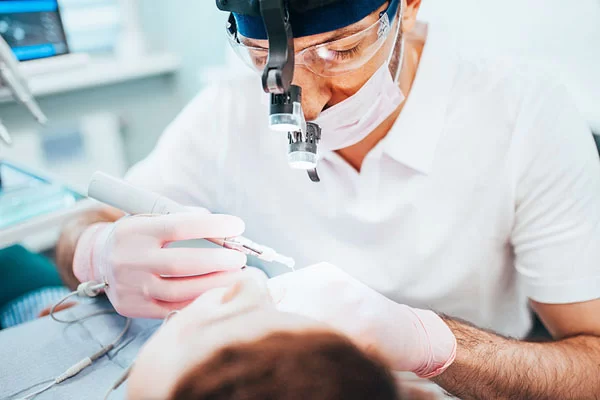
The Sinus Lift Process at Eastside Dental Implant Center
Here’s what to expect from start to finish.
Step 1: Your Consultation and 3D Scan
Your consultation starts with a thorough clinical exam and an in-office CBCT 3D scan. This isn’t a standard dental X-ray. CBCT imaging gives Dr. Sidhu a precise, three-dimensional map of your bone density, sinus cavity anatomy, nerve pathways, and surrounding tissue—a detail that’s essential for safe, accurate sinus lift planning. Most general dental offices don’t have this technology in-house. We do.
By the time you leave your first appointment, you’ll know:
- Whether a sinus lift is recommended for you
- Which technique (lateral window or crestal) fits your anatomy
- Whether simultaneous implant placement is an option
- A realistic timeline and cost estimate
Step 2: Day of Surgery
- Comfort first: Local anesthesia is administered before anything else. Oral conscious sedation or IV sedation is available for patients with dental anxiety. Just let us know when you schedule.
- Accessing the sinus: A small, precise incision is made in the gum tissue near your upper molars or premolars. Using specialized instruments, including piezoelectric ultrasonic tools for the crestal approach, Dr. Sidhu creates an opening to reach the sinus membrane without damaging the surrounding tissue.
- Membrane elevation: The Schneiderian membrane lining the sinus floor is carefully and gently lifted upward, creating a pocket beneath it. This step requires a steady hand and significant experience—a membrane perforation, while manageable, is the most common surgical complication of a sinus lift. Dr. Sidhu’s use of piezoelectric instruments significantly reduces that risk.
- Bone grafting: The space beneath the elevated membrane is filled with bone graft material. Depending on your case, this may be donor bone (allograft), synthetic bone substitute, or a combination. All materials used at Eastside Dental Implant Center are FDA-cleared and clinically proven for osseointegration.
- Closure: The surgical site is sutured, and you’ll receive detailed written aftercare instructions before you leave.
The procedure itself typically takes one to two hours.
Step 3: Healing and Integration
This is where the biology does the work. Over the next several months, the bone graft material is gradually replaced by your own living bone cells in a process called osseointegration. By the time Dr. Sidhu places your implant (or activates the one placed simultaneously), the graft has become part of your jaw.
Sinus Lift Recovery — What to Expect, Week by Week
Recovery from a sinus lift is more manageable than most patients expect. Here’s an honest breakdown:
- Days 1–3: Mild swelling in your cheek and under your eye is normal. Some patients experience minor nasal congestion or light bleeding from the nose. Take prescribed antibiotics and pain medication as directed. Sleep with your head elevated.
- Days 4–7: Swelling begins to subside. Soft foods only. Many patients return to desk work within two to three days.
- Weeks 2–4: Most discomfort is gone. You’ll have a follow-up appointment so Dr. Sidhu can confirm the site is healing properly.
- Months 1–6: The graft is integrating. No major restrictions, but avoid smoking (it dramatically reduces graft success rates) and contact sports until cleared.
Recovery DOs:
- Take all prescribed antibiotics
- Use a saline nasal spray to keep the nasal passage moist
- Sleep with your head elevated for the first few nights
- Attend every follow-up appointment
- Call us immediately if you notice bright red bleeding, severe pain, or signs of infection
Recovery DON’Ts:
- Don’t blow your nose for at least two weeks
- Don’t use straws or spit forcefully
- Don’t smoke or use nicotine products during healing
- Don’t sneeze with your mouth closed (sneeze with your mouth open if you can’t suppress it)
- Avoid strenuous exercise for the first 48–72 hours
- No hard, crunchy, or chewy foods until cleared
Sinus Lift Cost in Issaquah, WA — What Patients Are Actually Paying
We believe in transparent pricing. Sinus lift costs vary based on:
- Technique used: Lateral window procedures involve more surgical time and materials than a crestal approach
- Bone graft material: Donor allograft, synthetic, or combination grafts have different cost profiles
- Simultaneous vs. staged placement: Combining the sinus lift with implant placement in one visit can reduce total treatment cost
- Insurance coverage: Many dental insurance plans cover sinus lifts when deemed medically necessary as a prerequisite for implant placement
Sinus lift procedures in the greater Seattle/Eastside area generally range from $1,500 to $4,500 per side, with most straightforward cases in the $2,000 to $3,000 range. Complex cases requiring extensive grafting or staged placement with IV sedation will sit higher in the range.
Our team will verify your insurance benefits before your appointment, handle all pre-authorizations, and explain your out-of-pocket costs in plain language—not dental billing code. Flexible financing options are also available.
The best way to get an accurate number for your specific situation is to call (425) 526-5424 for a free consultation.
Related Supplemental Procedures at Our Issaquah Implant Center
A sinus lift is one part of a broader toolkit for making dental implants possible in challenging cases. Dr. Sidhu also offers:
- Bone Grafting: For bone loss in the lower jaw or other areas of the upper jaw not addressed by a sinus lift
- Soft Tissue Augmentation: Gum tissue rebuilding to ensure healthy support around your implant
- Dental Implant Candidacy Evaluation: A full assessment of your overall implant readiness before any procedure is recommended
Frequently Asked Questions
The only definitive answer requires imaging. During your free consultation at our Issaquah office, Dr. Sidhu takes an in-house CBCT 3D scan that measures your exact bone height in the posterior upper jaw and maps your sinus anatomy precisely. If you have less than approximately 10mm of bone height in the molar or premolar region, a sinus lift is typically recommended before or during implant placement.
Many patients who were told elsewhere they “aren’t candidates” for implants turn out to be excellent candidates after a proper evaluation. The barrier is often bone quantity, not overall health. Book a free consultation and find out exactly where you stand.
Most patients are pleasantly surprised. The procedure itself is performed under local anesthesia, so you’ll feel pressure but not pain. For anxious patients, we offer oral sedation or IV sedation so you’re comfortable and relaxed throughout. Post-operatively, expect swelling and mild soreness peaking around day two or three, similar to recovering from a tooth extraction. The most important restriction, and the one that catches patients off guard, is no nose blowing for two weeks. Most patients return to office work within a few days and report that recovery was easier than expected.
In some cases, it’s possible to place your dental implants at the same time as your sinus lift. If you have at least 5mm of existing bone height, Dr. Sidhu may be able to place the implant during the same procedure using a simultaneous approach. This reduces the number of surgeries and shortens your overall treatment timeline by several months.
In cases with less available bone, a staged approach—allowing the graft to fully integrate over six to nine months before placing the implant—gives more predictable long-term results. Dr. Sidhu will recommend the approach that’s right for your anatomy, not the one that’s fastest.
A well-executed sinus lift is permanent. Once the graft material has fully integrated and been replaced by your own living bone, it’s indistinguishable from native jawbone, and it doesn’t resorb the way it would if the tooth space were left empty. The implant placed into that bone, if properly maintained, is designed to last a lifetime. You won’t need the sinus lift “redone.”
Absolutely. Eastside Dental Implant Center is located in Issaquah at 5006 E. Lake Sammamish Pkwy SE, which puts us a short drive from Bellevue, Kirkland, Sammamish, Newcastle, Renton, Mercer Island, and Mirrormont. Many of our sinus lift and implant patients come from these communities specifically because our level of implant specialization isn’t available at general dental practices closer to their homes.
Bone grafting is the broader category. It refers to any procedure that adds bone material to the jaw to support implant placement. A sinus lift is a specific type of bone graft targeting the floor of the maxillary sinus in the upper jaw. All sinus lifts involve bone grafting, but not all bone grafts are sinus lifts. If you need bone added to your lower jaw, a different graft technique is used. Dr. Sidhu can walk you through exactly which procedure (or combination) applies to your situation.
Look for these three things when researching a sinus lift provider in the East Seattle and Issaquah area:
- Dedicated implant focus (not a general dentist doing occasional sinus lifts)
- In-house 3D imaging for accurate pre-surgical planning
- The use of modern techniques like piezoelectric surgery reduces membrane perforation risk.
Ask how many sinus lifts the provider has performed and what their complication rate is. A confident, experienced provider will answer those questions directly. At Eastside Dental Implant Center, Dr. Sidhu performs sinus lifts as a core part of a dedicated implant practice—not as an occasional add-on.